Queer Places:
Sherborne School, Abbey Rd, Sherborne DT9 3AP, United Kingdom
University of Cambridge, 4 Mill Ln, Cambridge CB2 1RZ
Lockeridge Ln, Lockeridge, Marlborough SN8 4EQ, United Kingdom
Harvard University (Ivy League), 2 Kirkland St, Cambridge, MA 02138
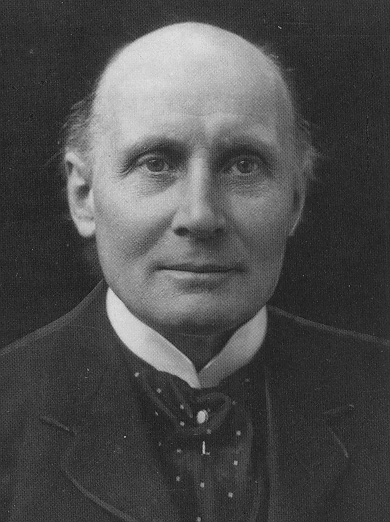 Alfred North Whitehead (February 15, 1861 – December 30, 1947) was born on February 15, 1861, in Ramsgate, Kent, England, into an academic and clerical family. His father,
Alfred Whitehead, served as an Anglican minister after working as a headmaster at Chatham House Academy, a boys' school previously led by Alfred's own father, Thomas
Whitehead. Whitehead's mother was Maria Sarah Buckmaster, whose family included notable figures such as her brother Thomas's son, Walter Selby Buckmaster, a two-time Olympic
silver medalist in polo for Britain. Educated at Sherborne, a prominent English public school, Whitehead excelled in both sports and mathematics while serving as head
prefect. In 1880, he entered Trinity College, Cambridge, studying mathematics under the guidance of advisor Edward Routh. He earned his B.A. in 1884 with a dissertation on
James Clerk Maxwell's A Treatise on Electricity and Magnetism and graduated as fourth wrangler. Following his graduation,
Whitehead was elected a fellow of Trinity College, marking the beginning of a thirty-year tenure at the institution where he spent five years as a student and twenty-five as
a senior lecturer and tutor. During his time at Cambridge, he became a member of the prestigious intellectual society known as the Cambridge Apostles. In 1890, he married
Evelyn Wade, an Irishwoman raised in France, with whom he had a daughter named Jessie and two sons, Thomas and Eric, though tragedy struck the family when Eric was killed in
action at age nineteen while serving in the Royal Flying Corps during World War I.
Alfred North Whitehead (February 15, 1861 – December 30, 1947) was born on February 15, 1861, in Ramsgate, Kent, England, into an academic and clerical family. His father,
Alfred Whitehead, served as an Anglican minister after working as a headmaster at Chatham House Academy, a boys' school previously led by Alfred's own father, Thomas
Whitehead. Whitehead's mother was Maria Sarah Buckmaster, whose family included notable figures such as her brother Thomas's son, Walter Selby Buckmaster, a two-time Olympic
silver medalist in polo for Britain. Educated at Sherborne, a prominent English public school, Whitehead excelled in both sports and mathematics while serving as head
prefect. In 1880, he entered Trinity College, Cambridge, studying mathematics under the guidance of advisor Edward Routh. He earned his B.A. in 1884 with a dissertation on
James Clerk Maxwell's A Treatise on Electricity and Magnetism and graduated as fourth wrangler. Following his graduation,
Whitehead was elected a fellow of Trinity College, marking the beginning of a thirty-year tenure at the institution where he spent five years as a student and twenty-five as
a senior lecturer and tutor. During his time at Cambridge, he became a member of the prestigious intellectual society known as the Cambridge Apostles. In 1890, he married
Evelyn Wade, an Irishwoman raised in France, with whom he had a daughter named Jessie and two sons, Thomas and Eric, though tragedy struck the family when Eric was killed in
action at age nineteen while serving in the Royal Flying Corps during World War I.
During his early professional career, Whitehead focused primarily on mathematics, logic, and physics. He spent the 1890s writing his Treatise on Universal Algebra and
subsequently collaborated with his former student Bertrand Russell on the monumental three-volume Principia Mathematica,
published between 1910 and 1913. This work became one of the twentieth century's most significant contributions to mathematical logic, later ranking twenty-third on Modern
Library's list of the top one hundred English-language nonfiction books of the century. In 1910, Whitehead resigned his senior lectureship at Trinity and moved to London.
After a period of transition, he accepted a position as a lecturer in applied mathematics and mechanics at University College London, followed by a professorship in applied
mathematics at Imperial College London in 1914, where he worked alongside his old friend Andrew Forsyth. His administrative responsibilities expanded significantly toward
the end of his time in England as he served as dean of the Faculty of Science at the University of London, joined the university's senate, and chaired its academic
leadership council. During this period, he successfully lobbied for a new history of science department and helped establish a Bachelor of Science degree to make education
more accessible.
Toward the late 1910s and early 1920s, Whitehead shifted his focus toward the philosophy of science and metaphysics. After publishing The Concept of Nature in 1920, he
served as president of the Aristotelian Society from 1922 to 1923. In 1924, at the age of sixty-three, he accepted an invitation from Henry Osborn Taylor to join the faculty
at Harvard University as a professor of philosophy, moving permanently to the United States. At Harvard, he experienced a prolific decade of achievement, producing seminal
works such as Science and the Modern World in 1925—which challenged prevailing Cartesian dualisms—and Process and Reality, published in 1929 following his lectures from 1927
to 1928. Developing what became known as process philosophy, Whitehead argued that reality consists of a web of interrelated processes rather than independent material
objects, creating a foundational framework that later influenced fields ranging from ecology and theology to education and physics. As a prominent figure at Harvard, he
found a close intellectual companion and Boswell in senior governing board member Price. Whitehead retired from Harvard in 1937 and remained in Cambridge, Massachusetts,
until his death on December 30, 1947, at the age of eighty-six, following which his cremains were scattered in Harvard Yard in accordance with his family's wishes and his
strict instructions that his personal papers be destroyed to protect his privacy.
References:
Other references:
- Victor Lowe, Alfred North Whitehead: The Man and His Work, 2 vols. (Baltimore: Johns Hopkins University Press, 1985–1990) – Widely recognized as the definitive, two-volume biography of Whitehead, serving as the foundational source for his life and academic career.
- Alfred North Whitehead and Bertrand Russell, Principia Mathematica, 3 vols. (Cambridge: Cambridge University Press, 1910–1913) – The monumental three-volume foundational work on mathematical logic.
- Alfred North Whitehead, Process and Reality: An Essay in Cosmology (New York: Macmillan, 1929) – The published text of his Gifford Lectures, serving as the masterwork and foundational text of process philosophy.
- Alfred North Whitehead, Science and the Modern World (New York: Macmillan, 1925) – His influential work examining the history of ideas and challenging Cartesian dualism.
- Alfred North Whitehead, The Concept of Nature (Cambridge: Cambridge University Press, 1920) – His Tarner Lectures delivered at Trinity College, marking his major early transition into the philosophy of science.
- Alfred North Whitehead, A Treatise on Universal Algebra, with Applications (Cambridge: Cambridge University Press, 1898) – His major 1890s mathematical treatise.
- Paul A. Bogaard and Jason Bell (eds.), The Harvard Lectures of Alfred North Whitehead, 1924–1925: The Philosophical Presuppositions of Science (Edinburgh: Edinburgh University Press, 2017) – The inaugural volume of the Edinburgh Critical Edition of the Complete Works of Alfred North Whitehead.
- David Conway, Find A Grave Memorial No. 6842065, "Alfred North Whitehead" – Biographical memorial compilation detailing his burial and memorial site at Trinity College Chapel and Harvard Yard.
Support this project
This website is a passion project researched, developed, and funded entirely by me. If you find the content valuable and would like to help support the ongoing research and hosting costs, any contribution is deeply appreciated.
Thank you for keeping this independent resource alive!
My books on Amazon: Elisa Rolle's books
BACK TO HOME PAGE

